Free Property Condition Report Template (Room-by-Room)
A free, printable property condition report template broken down room by room, with the sections, photo rules, and signature step that hold up in a deposit dispute.
Posted by
 William H. Mason
Related reading
Documenting a Property Condition for a New Tenant
The day a new tenant gets the keys is the one moment a unit's condition is undisputed. Here is how to document it so the move-in record protects your deposit, prevents disputes, and starts the tenancy fair.
How to Handle a Security Deposit Dispute
When a tenant disputes your deposit deductions, the outcome comes down to your records and your deadline. Here is how to handle a dispute, step by step, and how to win one.
How to Write a Property Condition Report (With a Free Template)
A clear, dispute-ready property condition report protects your deposit decisions. Here is what to record at move-in and move-out, room by room, and how to keep it.

A deposit dispute is rarely about whether the damage is real. It is about whether you can prove it was not there before. The landlord who wins is the one who can set a dated, photo-backed record on the table.
That record usually lives inside a property condition report. A good template turns a rushed move-in walkthrough into a structured inventory you fill in once and reuse at every turnover, so nothing gets forgotten in the pressure of handover day.
This is a free, printable property condition report template, broken down room by room. It covers the sections every version needs, the photo rules that make it stick, and the signature step that keeps a small disagreement from turning into a court date.
What a Property Condition Report Template Actually Is
A property condition report is a dated inventory of a unit's condition at a specific moment, usually move-in and move-out. The template is the structure you fill in, room by room and surface by surface, so two walkthroughs taken months apart can be compared item for item.
The legal framework behind it is summarized in the Cornell Legal Information Institute overview of landlord-tenant law, which lays out the burden landlords carry when they deduct from a deposit. A template does not change that burden, but it gives you the evidence to meet it.
It is not a replacement for a lease's inspection clause or a checklist signed at handover. Think of it as the spine those documents hang on: one consistent structure you return to at every stage of the tenancy.
The Sections Every Template Needs
A template that skips a section is a template that loses a dispute on the surface you forgot. Build these in from the start, and the same form will serve a move-in, a move-out, and a mid-lease check.
- Header: property address, unit number, landlord or manager name, tenant name, and the date of the walkthrough.
- Turnover status: whether this is a move-in, move-out, or periodic inspection, so one form covers all three.
- Room-by-room inventory: each room as its own section, with walls, floors, ceilings, doors, windows, and fixtures listed.
- Appliances: make, model, serial, and existing wear for every appliance that stays with the unit.
- Systems and safety: smoke and carbon monoxide detectors, ventilation, and any visible leaks or electrical issues.
- Acknowledgement: a place for the tenant to sign or note that they reviewed the record.
If you want the structure explained section by section, our guide on how to write a property condition report walks through each part in detail. This template is the fill-in version of that same structure.
The Room-by-Room Breakdown
Walk the unit in the same order every time. Consistency is what lets you line a move-in record up against a move-out record without the two drifting apart over the months between them.
In each room, capture the surfaces that actually get damaged during a tenancy, and skip nothing under the pressure of handover day. A rushed walkthrough is exactly how a chipped countertop becomes a charge you cannot prove.
- Living areas and bedrooms: walls and trim, paint condition, nail holes, flooring wear, and window screens and blinds.
- Kitchens: countertops, cabinet faces, the floor, the sink and faucet, and each appliance that stays.
- Bathrooms: tile and grout, caulk lines, the toilet and vanity, and any signs of past moisture.
- Doors, windows, and locks: that each opens, latches, and locks, plus the state of the hardware and weatherstripping.
- Exterior or shared areas: if you manage them, the entry, mailbox, and any assigned storage or parking.
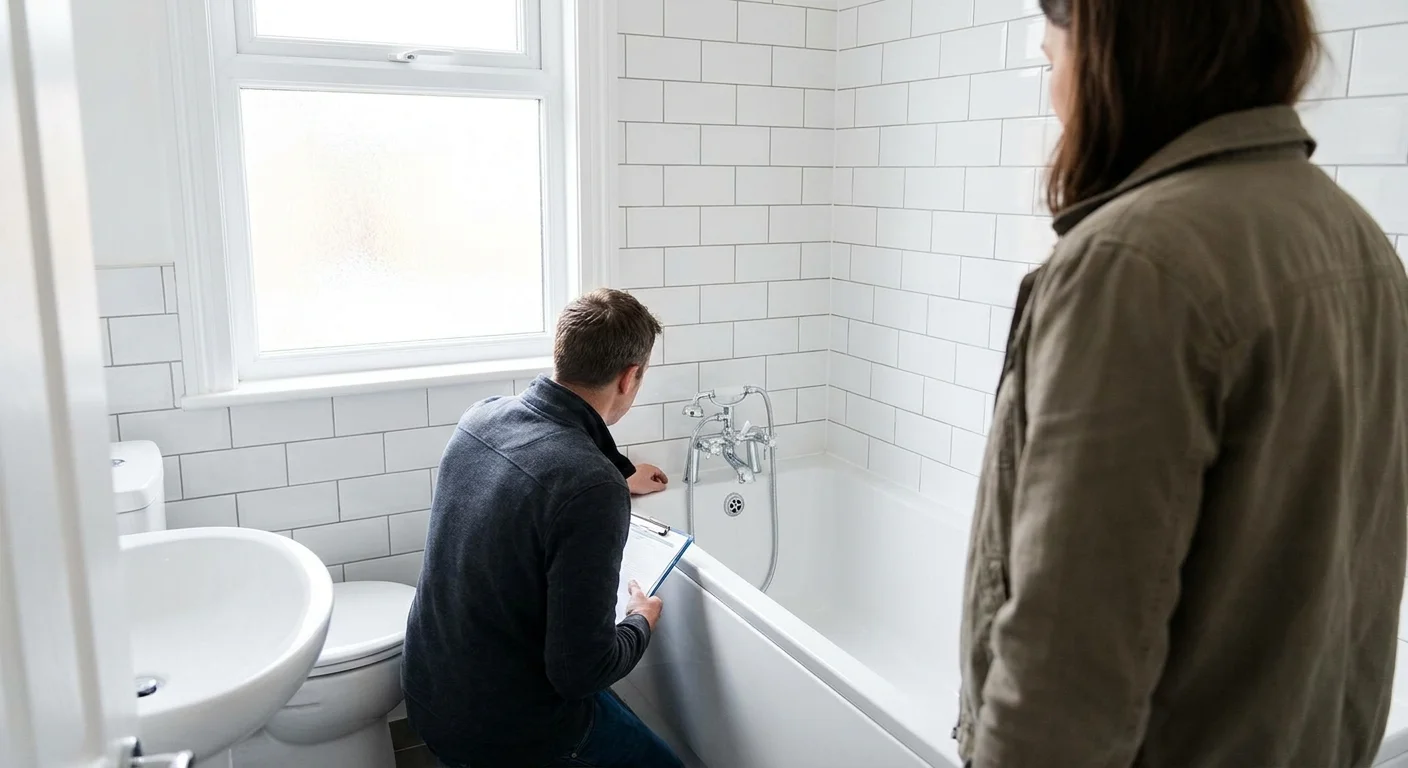
The strongest practice is to mirror this exact list at the other end of the lease. Our guide to documenting the difference between move-in and move-out shows why that before-and-after pairing is what actually wins a deduction.
Tie Every Line to a Photo
A line on the template that reads "minor scuff, living room wall" is only as strong as the photo beside it. The note describes the condition, and the photo proves it was there on that date.
Federal tenant-rights guidance from HUD treats the move-in inspection as a shared step because a record both parties accepted is the cleanest one there is. A photo next to each line is how you make the template something the tenant can agree to in good faith.
When the deductions finally come due, a plain-language reference like Nolo's security deposit resources is worth keeping close, since the deadlines and limits vary by state. Your template should leave room to attach an itemized deduction list later, rather than baking the numbers in at move-in.
Get It Signed
A condition report carries far more weight when the tenant has reviewed it. Acknowledgement removes the "I never saw that" defense before it can ever come up at move-out.
Share the finished record and ask the tenant to confirm it in writing, or to flag anything they think you missed. A signed checklist, a reply to a shared link, or a dated email all work, as long as you keep it on file.
If you are filling this in at handover, the steps are the same as those for documenting a property's condition for a new tenant. The template simply keeps them organized instead of scattered.
Printable Template or an App
You can run this template on paper, and plenty of landlords do. The friction shows up later: the photos live in your camera roll, the notes on a separate pad, and the dates nowhere, so the record is hard to assemble when you finally need it.
A property inspection app keeps each photo, finding, and date together as you walk, then turns the walkthrough into a clean property condition report you can share with the tenant for their signature. It lets you build a condition report from the photos you take, so the record is dispute-ready from day one instead of rebuilt in a panic at move-out.
If you would rather start on paper, grab the free move-in and move-out checklist. It is the printable version of this template, room by room, ready to fill in at handover and reuse at every turnover.
It is worth saying plainly what this report is and is not. It is structured condition documentation you create from your own photos and review before it is final. It is not a licensed or professional home inspection or appraisal, and it is not a substitute for either.
Keep the Record Past the Deposit
A filled-in condition report is not just dispute insurance. It becomes part of the operating history of the property, useful for budgeting repairs, backing an insurance claim, and substantiating the rental expenses you report at tax time.
The recordkeeping expectations for a rental are outlined in IRS Publication 527, and a dated condition file slots neatly into them. If the building predates 1978, federal law also requires a lead-based paint disclosure at move-in, the rules for which are laid out by the EPA's real estate disclosure guidance, and folding it into the same handover keeps the paperwork together.
Spend the hour, walk every room, photograph each line, and get it signed. Do that, and the hardest part of the next deposit decision is already done, long before anyone is arguing about a wall.
Turn your next walkthrough into a clean report
Snap photos at move-in, move-out, or a routine inspection and get a branded condition report you can hand a tenant or keep on file.
✓ Review every finding before you finalize ✓ Web report and PDF ✓ Cancel anytime
Frequently Asked Questions
A structured, fill-in inventory of a unit's condition at a specific moment, usually move-in and move-out. It lists each room and surface so two walkthroughs taken months apart can be compared item for item. You add the date, the parties, a photo for each line, and a tenant signature.
Yes. The free move-in and move-out checklist is the printable version of this template, room by room, ready to fill in at handover and reuse at every turnover. If you prefer to keep the photos, notes, and dates in one place, the app builds the report from the photos you take as you walk the unit.
It is not always legally required, but it is strongly recommended. A record the tenant has reviewed removes the 'I never saw that' defense at move-out. A signed checklist, a reply to a shared link, or a dated email confirmation all work, as long as you keep it on file.
No. It is structured condition documentation a landlord or property manager creates from their own photos, and you review every entry before it is final. It is not a licensed or professional home inspection or appraisal, and it is not a substitute for one. Consult an attorney or your local housing authority for the rules in your area.